How to Treat Chlorine Irritated Skin Safely and Effectively
A swim that feels refreshing in the water can feel very different an hour later, when skin turns tight, itchy, red, or rough. Chlorine helps keep pools cleaner, but it can also strip natural oils from the skin and upset the skin barrier, especially after long swims, frequent pool use, or time in heavily treated water.
Most chlorine irritation is not dangerous, and it often improves with simple skin care. The key is to rinse quickly, calm inflammation, restore moisture, and avoid anything that makes the barrier work harder.
This guide explains how to recognize chlorine irritation, treat it at home, prevent it next time, and know when it needs medical care.
This article is for general information only. It is not a diagnosis or a substitute for care from a licensed medical professional.

Why chlorine irritates some skin more than others
Chlorine is used in pools to reduce germs in the water. It is not automatically harmful to skin, but it can be irritating. The outer layer of the skin works like a protective wall. It holds water in and keeps irritants out. Chlorinated water can weaken that wall by washing away oils and drying the surface.
When the skin barrier is stressed, symptoms can show up fast:
Tightness or dryness after swimming
Itching or stinging
Redness or blotchy patches
Flaking or rough texture
Small bumps in irritated areas
Worsening eczema symptoms
This is usually irritant contact dermatitis, not a true chlorine allergy. A true allergy is less common and may involve hives, swelling, or symptoms beyond the skin. Pool water can also contain sweat, sunscreen, body products, and other chemicals that react with chlorine. Those byproducts may add to the irritation.
Some people are more likely to react, including those with eczema, very dry skin, sensitive skin, frequent swimmers, children, and anyone who showers with harsh soap right after swimming.
Chlorine can also bother areas where skin is thinner or already stressed, such as the face, neck, underarms, inner elbows, backs of knees, and anywhere a swimsuit rubs.
What to do right after swimming
The first few minutes after leaving the pool matter. The goal is to remove chlorine without scrubbing the skin raw.
Rinse with fresh water as soon as possible
Use lukewarm water, not hot water. Hot water can pull more oil from the skin and increase itching. A quick rinse is better than waiting until later. Pay attention to areas under straps, waistbands, swim caps, and goggles, where treated water can sit against the skin.
If a shower is not available right away, use a bottle of clean water to rinse the most sensitive areas, then shower fully when possible.
Use a gentle chlorine-out cleanser
Use a mild, chlorine removal cleanser , such TRISWIM Body Wash.
Avoid:
Strongly scented body washes
Exfoliating scrubs
Antibacterial soaps unless prescribed
Loofahs or rough washcloths
Very hot showers
Skin that is already irritated needs less friction, not more.
Pat dry and leave skin slightly damp
After rinsing, pat the skin with a soft towel. Do not rub hard. Moisturizer works best when applied while the skin is still a little damp because it helps trap water at the surface. Try TRISWIM Swimmers Lotion.
This step is simple, but it often makes the biggest difference.

How to calm chlorine irritated skin at home
Once the chlorine is rinsed away, treatment focuses on calming inflammation and rebuilding the skin barrier. For mild irritation, a short, simple routine usually works better than using many products at once.
Apply a thick, moisturizer made specifically for swimmers
Choose a thick lotion with shea butter such as TRISWIM Lotion rather than a thin lotion if the skin feels very dry. Thicker lotions tend to seal in moisture better. Look for products made specifically for swimmers or chlorine removal.
Helpful ingredients often include:
ProVitamin B5
Aloe vera
Coconut oil
Dimethicone
Glycerine
Shea butter, if tolerated
Apply lotion generously after rinsing and again before bed. If the skin is very dry, apply it several times a day.
Use a cool compress for itching or stinging
A cool compress can reduce the urge to scratch. Hold a clean, damp cloth on the irritated area for 10 to 15 minutes. Repeat as needed.
Do not put ice directly on the skin. Direct ice can cause more irritation, especially on already damaged skin.
Try colloidal oatmeal for widespread irritation
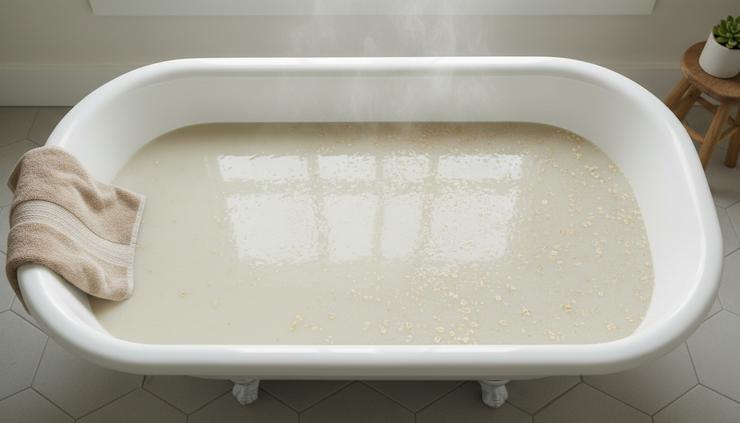
A lukewarm bath with colloidal oatmeal can help soothe itchy, dry skin. Keep the bath short, usually around 10 minutes. Long baths can dry the skin more, even if the water feels soothing at first.
After the bath, gently pat dry and apply moisturizer right away.
Consider over-the-counter hydrocortisone for small inflamed patches
For small areas that are red and itchy, an over-the-counter 1% hydrocortisone cream may help for a short time. Use a thin layer as directed on the product label.
Use extra caution with hydrocortisone on the face, eyelids, groin, or broken skin. Do not use it for long periods unless a clinician tells you to. If irritation keeps coming back or spreading, get medical advice instead of repeatedly treating it with steroid cream.
Leave the skin alone as much as possible
Scratching, picking, shaving over irritated skin, and applying strong skin care products can keep the cycle going. Give the skin a break for a few days.
Pause products that may sting or dry the skin, including:
Retinoids
Exfoliating acids
Alcohol-based toners
Acne spot treatments
Fragranced oils
Aftershave products
Self-tanner
Once the skin feels normal again, reintroduce products slowly.
What not to put on irritated skin
When skin itches, it is tempting to try anything that promises fast relief. Some common choices can make chlorine irritation worse.
Avoid applying lemon juice, vinegar, baking soda paste, toothpaste, hydrogen peroxide, or rubbing alcohol. These can burn, dry, or damage the skin barrier further.
Be careful with essential oils, even “natural” ones. Tea tree, peppermint, lavender, citrus, and eucalyptus oils can irritate sensitive skin, especially when applied after swimming.
Simple is safest: rinse, moisturize, cool the itch, and protect the area from friction.
How to prevent chlorine irritation before the next swim
Prevention starts before getting in the pool. The goal is to give the skin a little protection, then remove chlorine quickly afterward.
Shower before entering the pool
Wet skin absorbs less pool water than very dry skin. A quick rinse before swimming can reduce how much chlorinated water settles into the skin and hair. Many pools require this for cleanliness, but it can help skin comfort too.
Apply a barrier layer to sensitive areas
If certain spots always flare, apply a thin layer of lotion before swimming. Focus on areas that rub against swimwear or react often, such as the cheeks, neck, underarms, or backs of knees.
Do not use slippery products on the bottoms of the feet before walking near a pool.
Choose swimwear that reduces rubbing
Tight straps, rough seams, and damp fabric can worsen irritation. Rinse swimwear after each swim and wash it with a gentle, fragrance-free detergent. Residual chlorine in fabric can continue to irritate skin after leaving the pool.
If a child gets rashes where a swimsuit grips the skin, check for friction marks and try a different fit or fabric.
Moisturize on non-swim days too
Skin that is already dry reacts faster. A daily moisturizer helps maintain the barrier so pool exposure is less likely to trigger itching and redness. TRISIWM Lotion is safe for daily use, even if not swimming.
This matters most for people with eczema or sensitive skin. Consistent care between swims can reduce flare-ups.
Keep swim sessions reasonable
Long exposure can make irritation more likely. If skin often flares after swimming, try shorter pool sessions and rinse during breaks. For frequent swimmers, moisturizing before and after each session becomes more important.
When chlorine irritation may be something else
Not every rash after swimming comes from chlorine. Other conditions can look similar, and some need different treatment.
Watch for signs of infection
Seek medical care if the skin becomes increasingly painful, swollen, warm, or tender. Yellow crusting, pus, red streaks, fever, or rapidly spreading redness can signal infection.
Broken skin from scratching can let bacteria in, especially if irritation continues for several days.
Consider eczema, hives, or folliculitis
Chlorine may trigger an eczema flare in people who already have eczema. These flares often appear in familiar places and may need a prescribed treatment plan. Some swimmers have reported that TRISWIM Body Wash has helped their eczema flares.
Hives look like raised welts that come and go. They may suggest an allergic reaction or another trigger.
Folliculitis affects hair follicles and often looks like small red or pus-filled bumps, sometimes after hot tubs or poorly maintained water. It is not treated the same way as dry irritation.
Get urgent help for severe allergic symptoms
Get emergency care right away if skin symptoms come with trouble breathing, swelling of the lips or face, dizziness, chest tightness, or widespread hives. These symptoms may signal a serious allergic reaction.
For less urgent but ongoing irritation, contact a healthcare professional if:
The rash lasts more than a few days despite home care
It keeps returning after every swim
It affects the face, eyelids, or genitals
The skin cracks, bleeds, or oozes
A baby or young child has significant irritation
Over-the-counter products sting or make it worse
A simple recovery routine after a chlorine rash
A clear routine can keep treatment from getting too complicated. For mild chlorine-related irritation, try this for the next few days:
Rinse with lukewarm water
Remove chlorine and pool residue without scrubbing.
Use a gentle cleanser
Keep cleansing with a chlorine-out cleanser
Pat dry
Leave skin slightly damp rather than completely dry.
Apply a thick lotion
Cover all irritated areas and repeat during the day if tightness returns.
Use cool compresses for itching
Calm the skin instead of scratching.
Skip harsh products
Pause exfoliants, retinoids, fragrance, and shaving over the irritated area.
Protect the area
Wear soft, breathable clothing and avoid friction until the skin settles.
If the skin is improving, keep the routine going until it feels normal. If it is not improving, or if symptoms worsen, get professional care.
The safest way to get back in the pool
Chlorine irritated skin usually improves when the skin barrier gets a chance to recover. The best treatment is not complicated. Rinse soon after swimming, use lukewarm water, moisturize while skin is damp, and avoid harsh or scented products until the irritation clears.
Before the next swim, protect sensitive areas with a simple barrier layer, rinse before and after the pool, and keep moisturizer in the swim bag. If the rash is painful, spreading, oozing, or keeps returning, ask a healthcare professional to check it. The right diagnosis matters, and it can help keep swimming comfortable instead of irritating.


Comments